
Evaluate the condition
Your symptoms, history and examination help the team determine whether disc or nerve pressure may be involved.
Controlled spinal decompression uses a specialized motorized table to gently stretch the spine and may reduce pressure on certain spinal discs and irritated nerves.
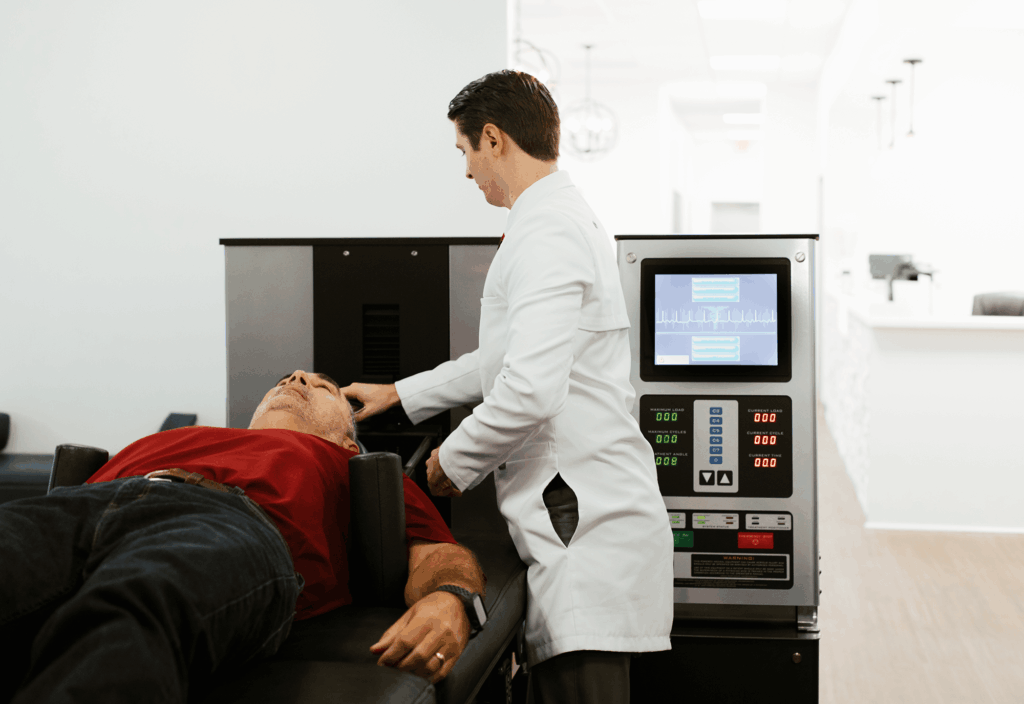
Treatment is performed on a motorized decompression table without an incision.
Table settings are selected for the specific area and condition being addressed.
Decompression may be paired with chiropractic or other conservative care.
During treatment, a harness is placed around the pelvis and trunk while you lie face up or face down on a specialized table. The computer-controlled table applies precise traction, and Dr. Levi Wainwright monitors and adjusts the settings.
As the spine is gently stretched, pressure within certain spinal discs may decrease. This can help reduce stress on nearby nerves and structures and may improve movement in appropriate cases.
Your symptoms, history and examination help the team determine whether disc or nerve pressure may be involved.
Positioning and computer-controlled traction settings are selected for the area being treated.
The number and frequency of sessions depend on your individual condition and response to care.
An evaluation is needed to decide if decompression belongs in your care plan.
Patients generally feel a controlled stretching sensation. Some people with significant disc damage may experience minor discomfort during early sessions.
The number of sessions varies by condition. Dr. Levi Wainwright will recommend a plan after assessing your specific needs.
Yes. The clinic may use decompression as part of a broader conservative plan when the evaluation supports that approach.
Schedule an evaluation so the team can review your symptoms and explain the most appropriate options.